How to Spot a Bad Paver Patio Installation
By Tyler Warker · March 25, 2026

A paver patio looks simple when it's finished. That's the problem — most of the work that decides whether it lasts is buried out of sight. Here's how to tell a quality install from one that will fail.
Was the base done right?
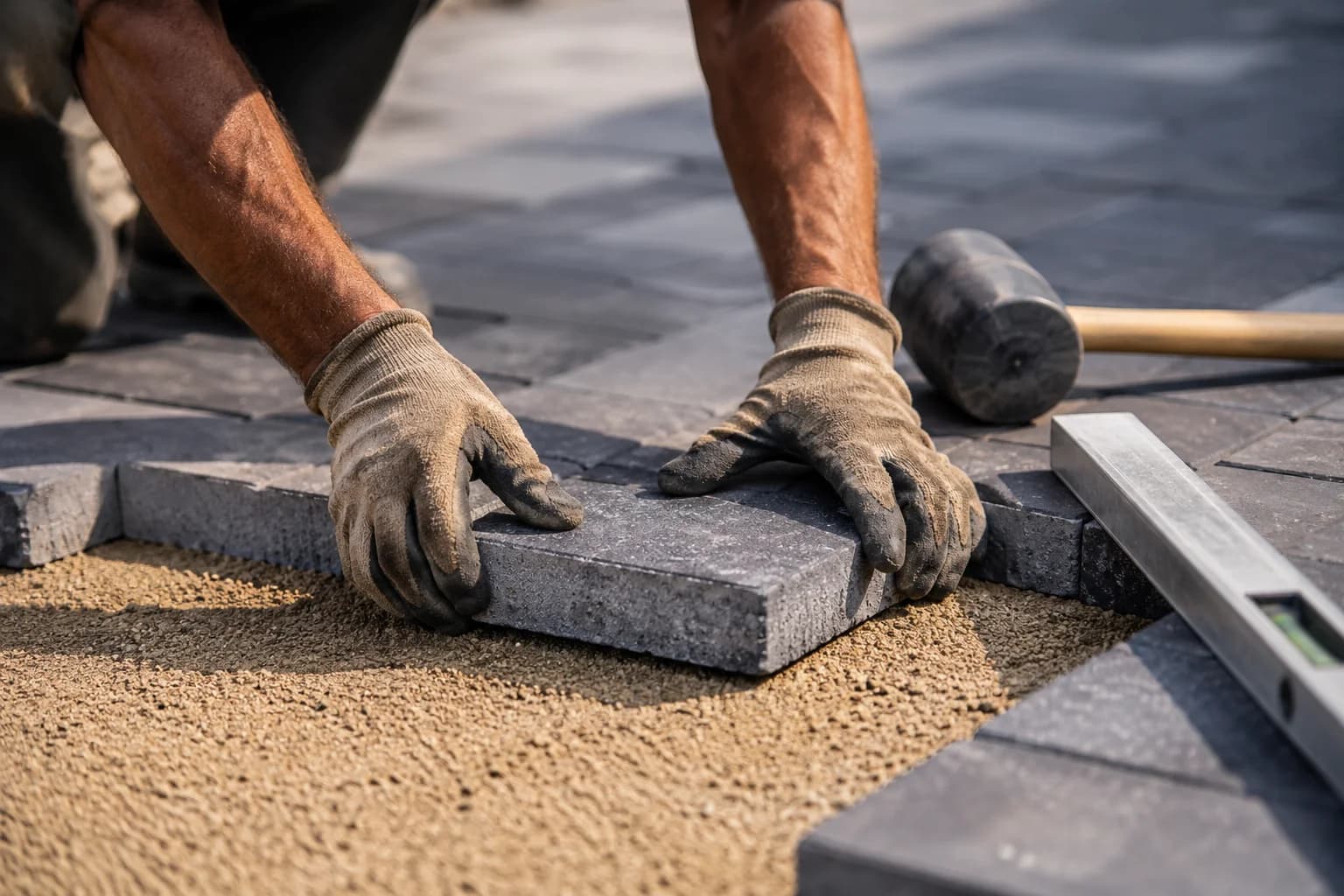
The base is everything. A proper patio sits on several inches of compacted crushed stone, installed in layers and compacted between each one. If a crew digs a shallow hole, throws down some sand, and starts laying pavers, the patio will settle and heave within a couple of seasons. Ask any contractor how deep they excavate and how they compact — the answer tells you a lot.
Is there a proper edge restraint?
Pavers along the perimeter need something holding them in place, or the whole field slowly spreads outward and the joints open up. A solid install uses a rigid edge restraint locked in with spikes. If the edges of a patio are drifting or the border pavers wobble, the restraint was skipped or done poorly.
What do the joints and surface tell you?
Look down at a finished patio. The lines between pavers should be tight and consistent, the surface should be flat with no dips or high spots, and the joints should be filled with polymeric sand that locks everything together and blocks weeds. Wide, uneven gaps or loose sand are warning signs.
How do you protect yourself?
Ask to see real finished projects, get references, and get the scope in writing — including base depth. A good crew is happy to explain exactly what's going under your patio, because that's the part they're proud of.
Want a patio built the right way the first time? Call T.W. Outdoor Services at (609) 674-4715 for a free estimate.
Want it done right the first time?
Free estimates across South Jersey — no pressure, just honest advice.