How We Build a Paver Walkway, Step by Step
By Tyler Warker · June 5, 2026
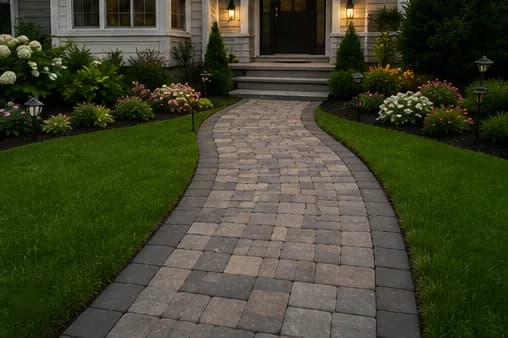
A good paver walkway looks simple when it's done — that's the point. But the difference between a path that's still dead-flat in fifteen years and one that's heaving and weedy by year three is almost entirely in the stages you never see. Here's how we built this one, start to finish.
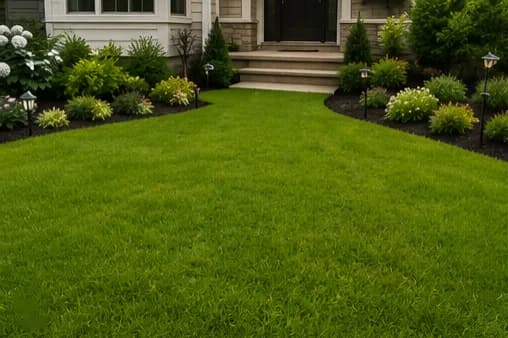
Step 1 — Layout and the bare yard
Every walkway starts with a line. We mark the route, set the width, and check how it flows from point A to point B — and just as importantly, which way water needs to run off it. Get the layout right here and everything downstream is easier.
Step 2 — Excavation
We dig out far deeper than the pavers themselves. A walkway that's only an inch or two into the dirt has nothing under it to fight frost — and in South Jersey, freeze-thaw is what destroys hardscaping. We over-excavate so there's room for a real compacted base.
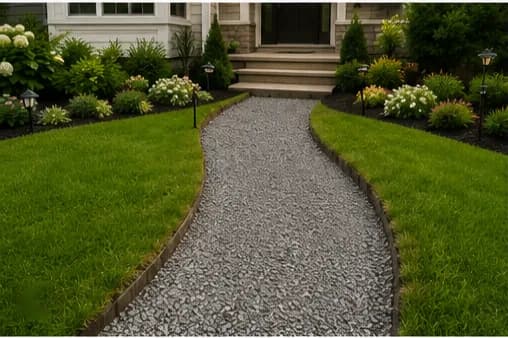
Step 3 — Base, compacted in lifts
This is the part that actually holds your walkway up. We bring in crushed stone and compact it in thin layers — "lifts" — rather than dumping it all at once. Each lift gets run with a plate compactor before the next goes down, because a base compacted in one thick pour is soft in the middle no matter how good it looks on top.
Step 4 — Screeding the sand bed
On top of the compacted base goes a thin, precise layer of bedding sand, screeded perfectly flat with a slight pitch for drainage. This isn't structure — it's the setting layer that lets each paver seat evenly. Too thick and the pavers can rut over time; we keep it consistent across the whole run.
Step 5 — Laying the pavers
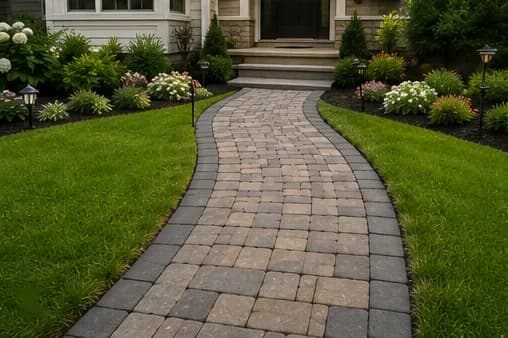
Now the part everyone pictures. We set the pavers in the chosen pattern, keeping joints tight and the field running true off our layout lines. Cuts at the edges are measured and made clean so the border looks intentional, not patched.
Step 6 — Edge restraint and joint sand
Pavers don't stay put on their own — they need something locking the perimeter, or the whole field slowly spreads and the joints open up. We install edge restraint around the borders, then sweep polymeric joint sand into the seams and set it. That sand locks the pavers together, blocks weeds, and keeps ants from tunneling the joints.
The finished walkway
The result is a flat, durable path that drains the right way and will stay that way through South Jersey winters. And because it's built in pieces over a real base, if a tree root ever lifts a section years down the line, we can pull those pavers, fix the base, and re-lay the same stone — the repair disappears.
Thinking about a walkway, patio, or driveway for your place? We build them this way on every job, across South Jersey. Call (609) 674-4715 or grab a free quote in about 60 seconds.
Want it done right the first time?
Free estimates across South Jersey — no pressure, just honest advice.