Which Retaining Wall Material Should You Choose in South Jersey?
By Tyler Warker · September 14, 2026
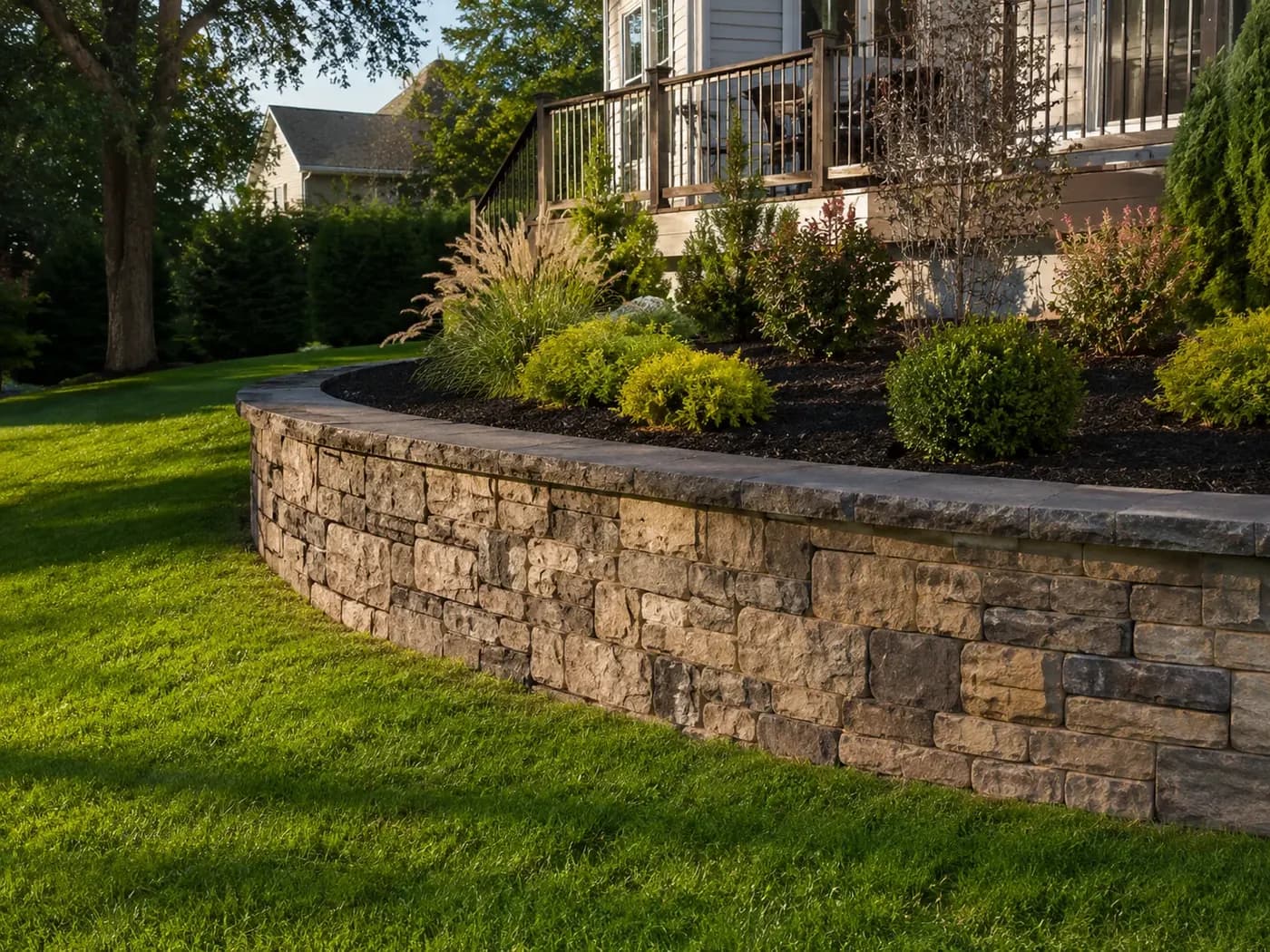
Most homeowners do not start a retaining wall project by researching materials — they just want the slope held back and the yard to look right. But the material you pick affects cost, lifespan, how much drainage work the wall needs, and what happens twenty years later when the ground does what South Jersey ground does. Freeze-thaw cycles, sandy soil under a clay layer, and heavy summer storm runoff all narrow the field before you ever compare prices.
What makes concrete block the most common choice for South Jersey retaining walls?
Segmental concrete block — the engineered retaining wall units sold at masonry suppliers — is the default for a reason. Each unit is consistent in size and designed to be stacked with crushed-stone backfill and a drain pipe behind it. Taller walls can use geogrid reinforcement that ties back into the soil, and the individual blocks can flex slightly through a freeze-thaw cycle without cracking the way a rigid poured wall can. For most residential walls up to four feet in Egg Harbor Township and nearby towns, block is the practical, durable, and cost-effective choice. It is also straightforward to repair: lift the settled course, correct the base, and reset the same units.
How does natural stone compare to concrete block?
Natural stone — fieldstone, tumbled granite, or flagstone — is permanent and looks different from anything mass-produced. A dry-stacked stone wall blends into a landscape in a way that engineered block never quite does. The trade-off is labor. Each piece is different, so fitting the courses takes more time and a skilled eye. A mortared stone wall is cleaner in appearance but less flexible — a freeze-thaw crack in mortar is harder to repair invisibly than a shifted block course. If the project calls for something that looks like it has been there for decades, natural stone earns that look. If the job is practical and the budget is fixed, block usually wins on value.
Is timber worth using for a retaining wall in South Jersey?
Timber is the least expensive material upfront and the shortest lived. In drier climates, a well-built treated timber wall can last 15 to 20 years. In South Jersey, year-round soil moisture, summer humidity, and insect pressure push rot faster than that estimate. Treated landscape timbers hold longer than untreated wood, but no timber wall lives as long as block or stone in our conditions. The practical case for timber is a low, informal application — a small raised bed edge or a single-course garden border — where the savings are real and replacement will not be a major project. For anything actually holding back soil on a slope, block or stone is the better long-term investment. And regardless of which material goes in, drainage is what decides whether a wall stands: a block wall without a gravel backfill and a drain pipe at the base will fail faster than a timber wall built with proper drainage. If you are planning a new retaining wall or replacing one that has started to lean, call T.W. Outdoor Services at (609) 674-4715 and we will walk the site, tell you what the ground needs, and give you a straight estimate.
Want it done right the first time?
Free estimates across South Jersey — no pressure, just honest advice.