What Actually Goes Into a Paver Patio Base in South Jersey?
By Tyler Warker · September 21, 2026
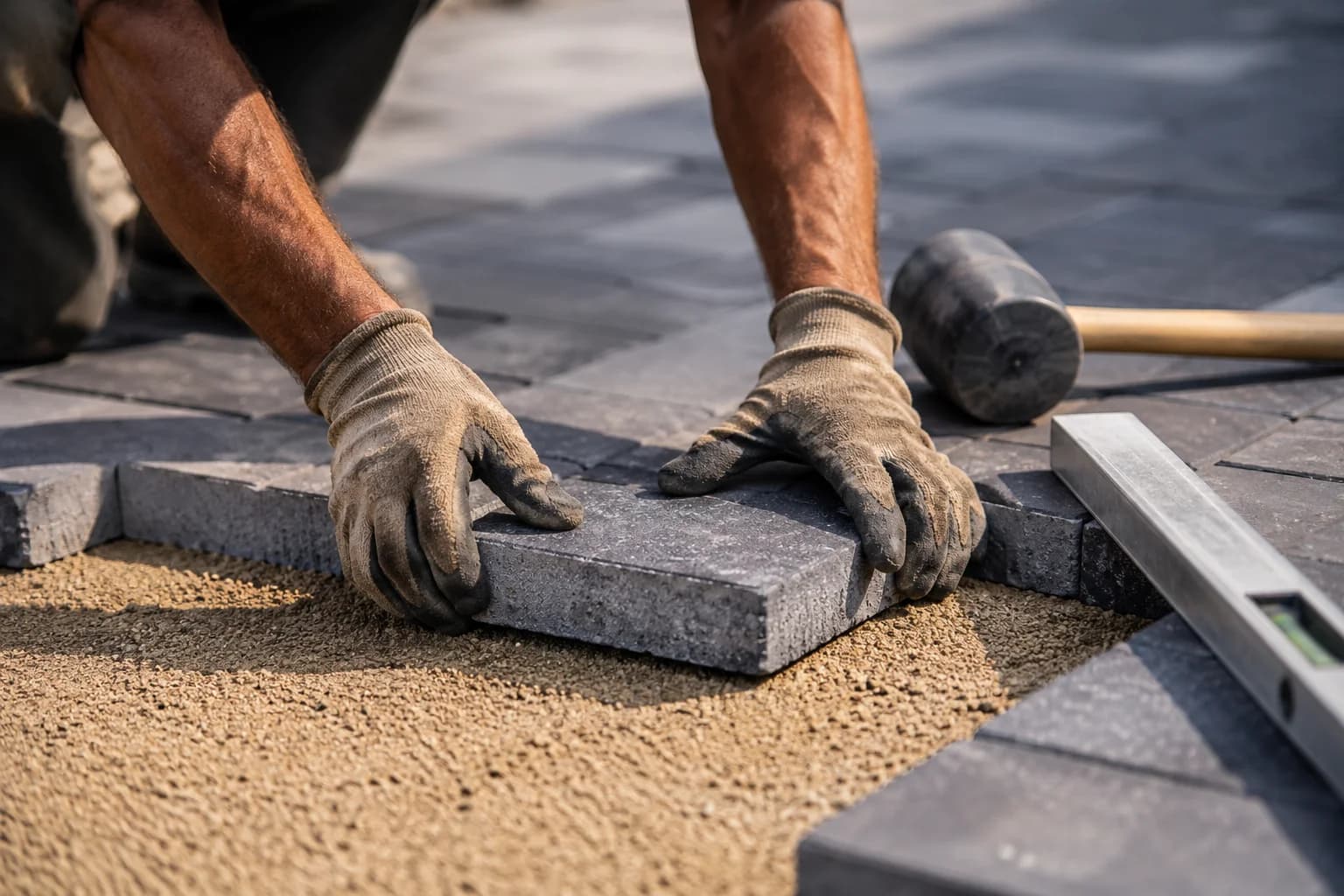
Most homeowners never see the base of a paver patio — it gets covered before the work looks like anything. That is exactly why it matters more than the pavers themselves. A patio built on a rushed or shallow base starts rocking, sinking, and spreading within a few seasons. A patio built on a proper base can go twenty or thirty years without needing more than joint sand and occasional cleaning.
Why does the base matter more than the pavers themselves?
Pavers do not hold themselves in place. They sit on whatever is underneath them, and in South Jersey that means dealing with sandy topsoil that drains fast on the surface but often sits on top of clay layers that hold water. When rain soaks into the base, pools under the stone, and then freezes in a South Jersey winter, the ground moves. A thin or poorly compacted base moves with it. The pavers go with the base.
What does excavation actually involve for a paver patio in South Jersey?
We start by digging down to get well below the soft organic layer — typically eight to twelve inches below where the finished surface will sit, sometimes more on lots near the bay or in low-lying areas of Egg Harbor Township, Somers Point, and the island towns. That soil comes out completely. Organic material cannot be compacted into a stable base no matter how much weight you put on it. What goes back in is clean crushed stone, installed at the right slope so water drains away from the house and does not pool under the pavers.
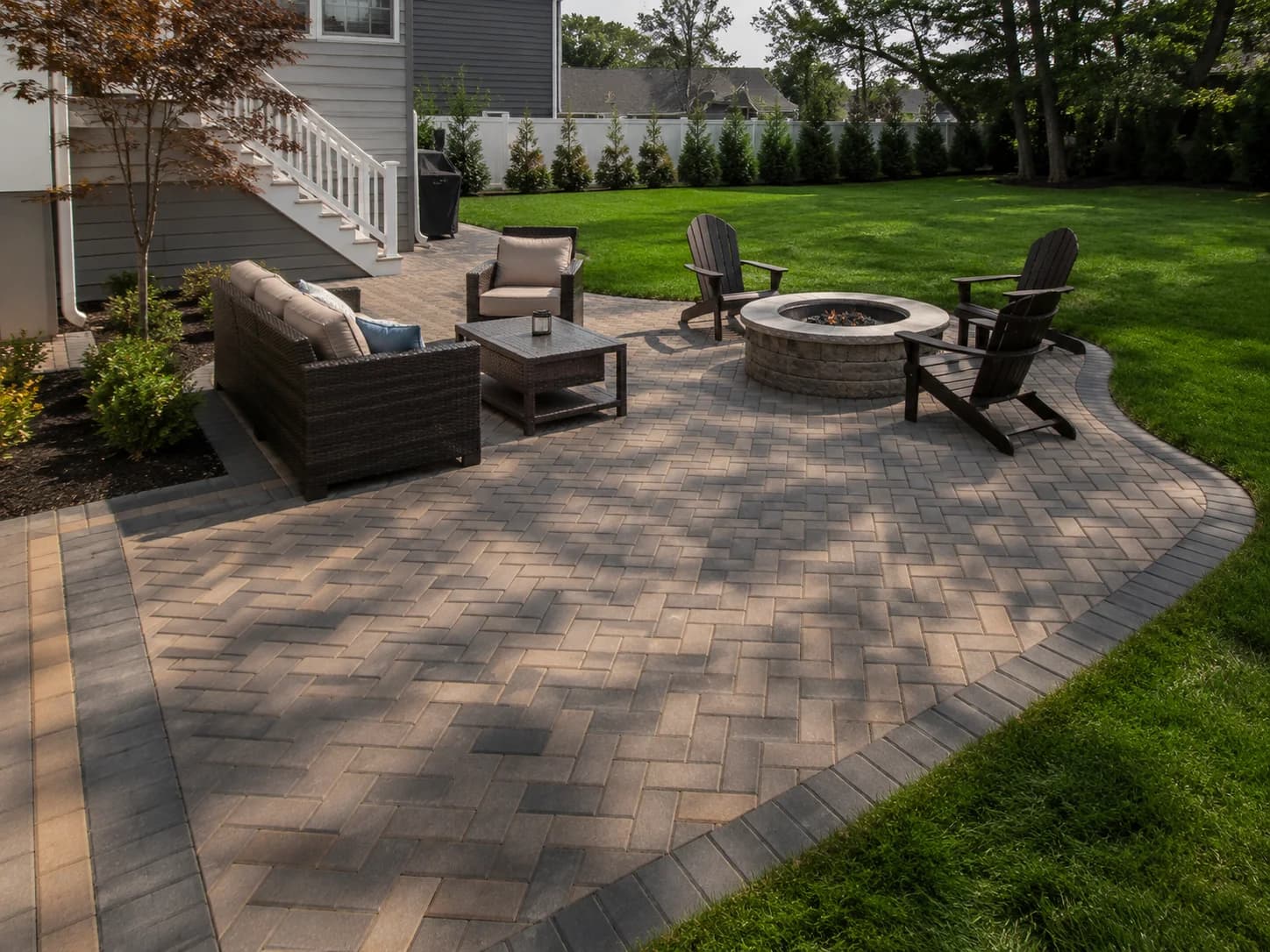
How is the gravel compacted in a way that actually prevents settling?
The stone goes in as layers, not all at once. We fill in a few inches, run a plate compactor over it, then add the next lift and compact again. This is the step most rushed installs skip or shortcut — a plate compactor running over a full deep fill one time does almost nothing useful. Proper lifts take more labor, but it is the only way to build a base that does not shift under foot traffic, vehicle weight, and South Jersey freeze-thaw. On top of the compacted stone goes a thin, screeded layer of coarse bedding sand — just enough to seat each paver flat and tight. The pavers go down, polymeric sand fills the joints, and edge restraint locks the whole field in place. If a patio you have is sinking, rocking, or spreading at the edges, the base is almost always where the problem started. T.W. Outdoor Services builds and repairs paver patios in Egg Harbor Township and nearby South Jersey. Call (609) 674-4715 for a free estimate and we will tell you straight what is there and what it needs.
Want it done right the first time?
Free estimates across South Jersey — no pressure, just honest advice.