Why Your South Jersey Yard Floods After Storms
By Tyler Warker · June 23, 2026
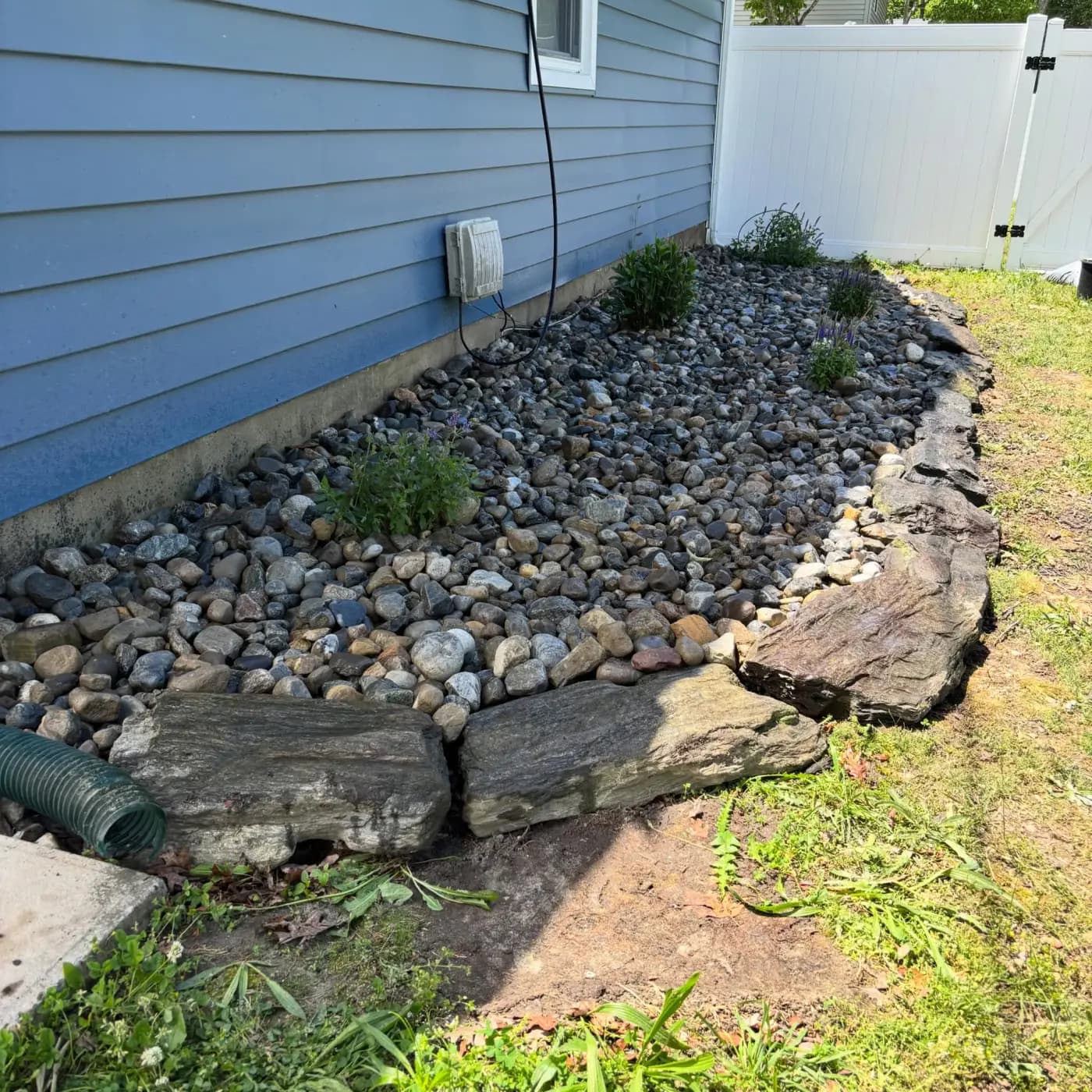
It rains hard for twenty minutes on a July afternoon, and an hour later half your yard is still a shallow lake. The grass turns spongy, the mulch floats out of the beds, and water creeps toward the foundation. If that's your summer, you're not imagining it — South Jersey is built to do exactly that, and the fix is almost never "wait for it to dry out."
Why does South Jersey flood so easily?
Two reasons, and they work against each other. Most of our soil is sandy and drains fast — until it hits a layer of clay or a high water table, which a lot of our lots have, especially near the bay in towns like Somers Point, Margate, and Brigantine. The rain soaks down a few inches, hits ground that's already saturated, and has nowhere left to go. So it sits on the surface. Add a summer storm that dumps an inch in half an hour and the ground simply can't keep up.
The other half is grading. A lot of yards here are nearly flat, and builders rarely pitch a lot well past the first ten feet from the house. Flat ground plus saturated soil equals standing water — every time.
Where is the water actually coming from?
Before any fix, we figure out the source. Roof runoff dumping out of downspouts right against the house is the most common culprit — one downspout can move hundreds of gallons in a single storm straight into your foundation. Next is a yard that slopes toward the house instead of away from it. Then there's surface water sheeting in from a neighbor's higher lot. Each one has a different fix, which is why "just put in a drain" is rarely the whole answer.
The cheapest thing you can do before you call anyone is watch your own yard during the next real storm. Where does the water collect first? Which way is it moving? Does it back up against the foundation or pool in one low corner? A two-minute look in the rain tells us more than a dry walkthrough does, and it usually points straight at the cause. If your downspouts dump within a foot of the wall, extending them out into the yard is sometimes enough on its own — and it costs almost nothing.
What drainage fixes actually work here?
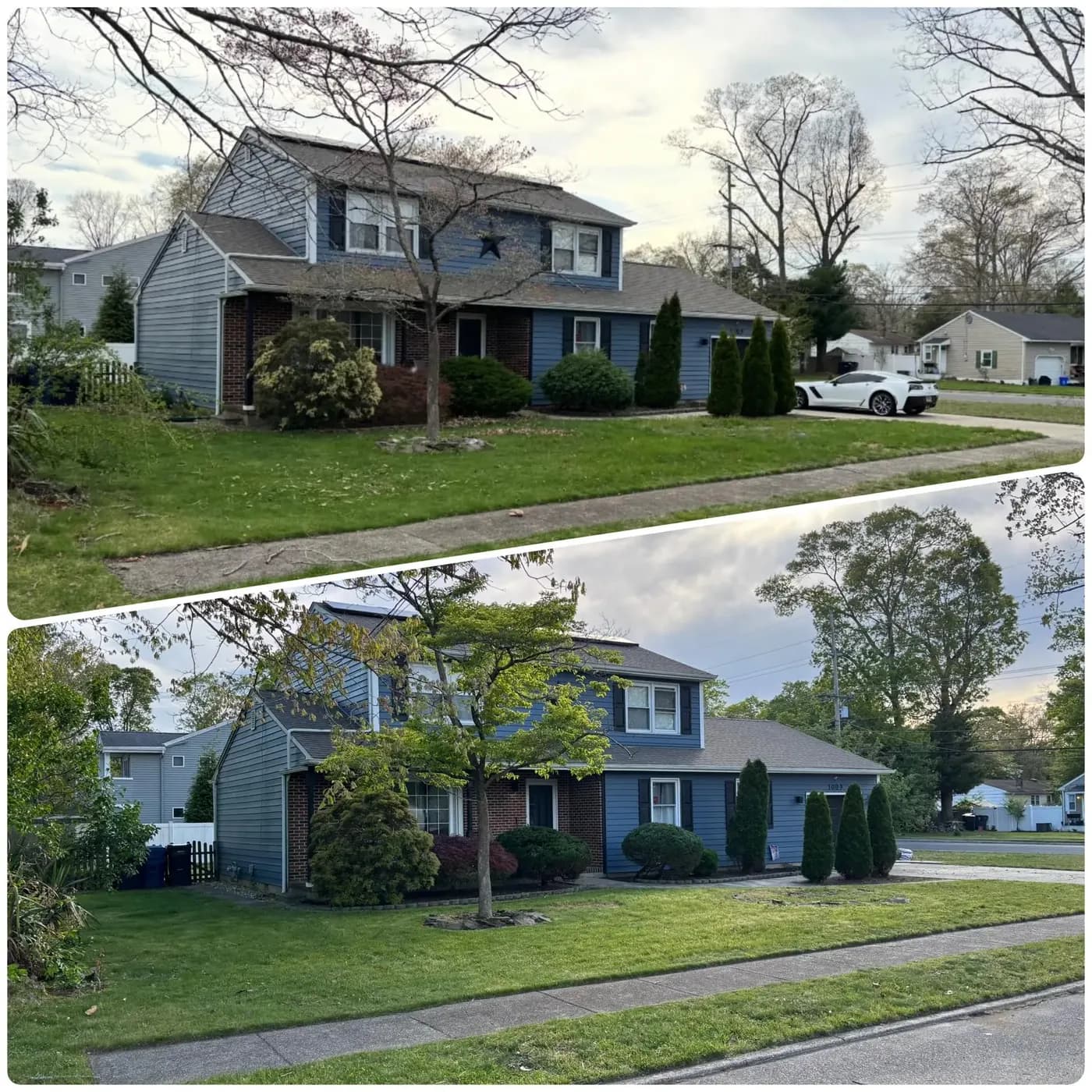
Regrading comes first. If the ground pitches toward the house, no drain downstream will save you — we re-shape the grade so water runs away from the foundation before it ever pools. From there, the workhorse fixes are French drains (a perforated pipe in a gravel trench that intercepts water and carries it off) and dry wells (a buried gravel chamber that gives a saturated lot somewhere to hold water until it can soak away). On lots where there's nowhere to send the water, we route it into a dry well or a rock infiltration bed instead of fighting it across the surface.
If you're also planning hardscape, the surface itself can be part of the solution. Permeable pavers let storm water pass straight through the joints into a deep aggregate base instead of sheeting off — which is why they're our default on low-lying bayside lots and in flood zones. A standard concrete slab does the opposite: it sheds every drop somewhere, so where that water goes has to be designed, not left to chance.
Drainage usually rides along with a bigger project, so it's worth knowing how it ties into the rest: yard renovations and grading, permeable paver patios, retaining walls with built-in drainage.
Can't I just wait until the ground dries out?
You can, but standing water isn't only a nuisance. Water that sits against a foundation finds its way in — that's how basements get damp and footings get undermined. Saturated soil behind a slope or a wall freezes and pushes come winter. And a yard that pools every storm kills grass, drowns plant roots, and breeds mosquitoes all summer. The damage compounds; the fix doesn't get cheaper by waiting.
We work all over the bayside and inland towns where this comes up most — from the marina-side lots in Somers Point to the island blocks of Margate and Brigantine. If your yard turns into a pond every time it storms, we'll walk it, find where the water's coming from, and tell you straight what it'll take to fix. Call us at (609) 674-4715 for a free estimate.
Want it done right the first time?
Free estimates across South Jersey — no pressure, just honest advice.